We Lost on Value Exchange Design
When a deal falls apart, the explanation comes quickly.
“We lost on price.”
Most of the time, that statement is technically accurate. A lower number would likely have reduced friction. But reducing friction is not the same as strengthening positioning.
Price is where the decision shows up. It is rarely where the exchange of value was defined.
When buyers hesitate, it often isn’t because the number is objectively too high. It’s because the exchange is not clear enough to justify. Internally, they can’t confidently explain what changes for them, why it matters, or why it deserves that level of investment.
That hesitation was created long before pricing entered the conversation.
Where Product Enters the Story
Product organizations are exceptionally good at improving movement. Delivery becomes more predictable. Adoption rises. Engagement improves. Roadmaps expand.
Those improvements are real. They matter.
But movement does not automatically strengthen the value exchange.
Over time, many companies invest in adjacent capabilities, additional features, and new modules. Function increases. Usage climbs. The product appears stronger.
What is less frequently examined is whether those investments deepen the exchange or simply broaden it.
Do they make the product more indispensable for a defined group of customers? Or do they make the offering more complex without sharpening justification?
When that distinction is not clear, pricing pressure increases.
How Discounting Hides the Real Signal
When sales lowers the price to win a deal, the organization reduces the buyer’s sacrifice. The deal may close. Revenue is booked. Everyone feels relief.
But the most important signal is lost.
Where did the value exchange fail to stand on its own?
If the answer is always “price,” the organization never examines how the value is packaged, positioned, and reinforced through the product experience.
Over time, discounting becomes normalized. Packaging evolves reactively. Margins compress. Confidence weakens — even while usage metrics remain strong.
This isn’t a sales discipline issue.
It’s a product clarity issue.
The Reframing
This isn’t a pricing problem.
It’s a value exchange design problem upstream of pricing.
Agile maturity improves how quickly and reliably teams ship. Pricing maturity improves how clearly the exchange is defined, reinforced, and defended.
Those are different capabilities.
A well-designed value exchange answers three questions clearly:
Who is this truly for?
What specific change does it create?
Why is that change worth this price?
If those answers are misaligned, packaging becomes complicated and pricing becomes negotiable.
If those answers are sharp, packaging simplifies and pricing stabilizes.
Where Packaging and Profit Streams Connect
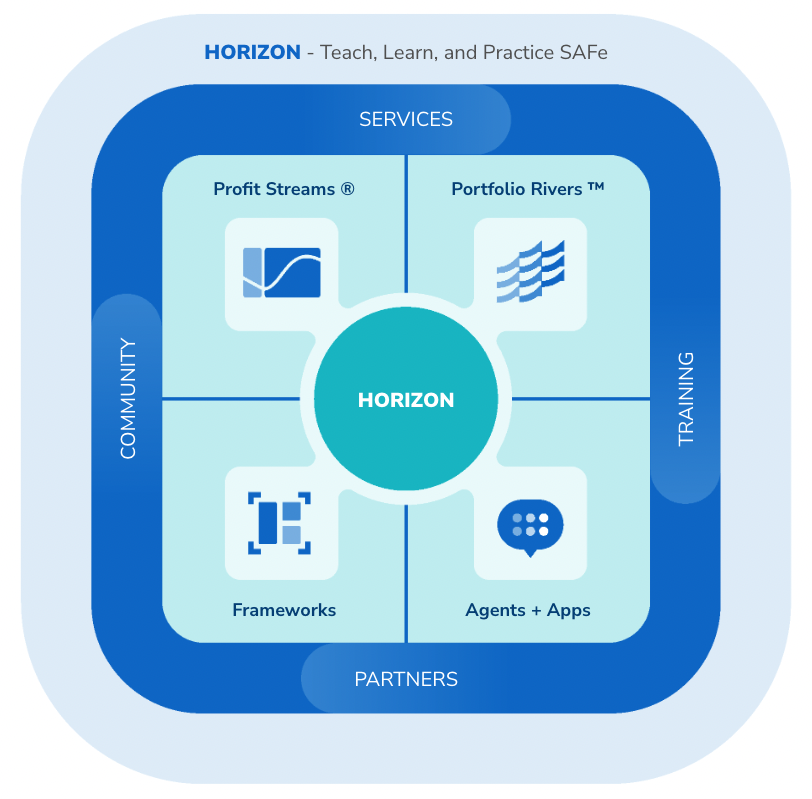
This is where Profit Streams becomes practical.
Profit Streams forces the organization to make the value exchange explicit. Instead of debating discount levels, leaders map which customer clusters realize durable value and which combinations of capabilities those customers rely on.
The canvas surfaces a simple truth: customers experience value in combinations and different outcomes, not in isolated features or internal team structures.
When packaging reflects how customers actually use and depend on those combinations, the exchange becomes easier to justify. Pricing confidence improves because the logic is visible.
When packaging reflects the internal roadmap instead of customer reliance, the exchange weakens. Discounting fills the gap.
Profit Streams does not start with revenue targets. It starts with clarity — how value is created, for whom, and how that value supports sustainable solutions, economics ties and relationships with customers.
Price doesn’t lose deals on its own.
A poorly designed value exchange does.
Profit Streams is how you design it intentionally.
—
Applied Frameworks
Designing profit streams that stand at their price